 Hero · 2400 × 1300Heatmap overlay on a foundation repair service page displayed on a monitor.
Conversion Rate Optimization for More Qualified Inspection Requests
Conversion rate optimization for foundation repair companies improves how effectively a website turns relevant visitors into calls, forms, and qualified inspection requests.
More traffic cannot solve unclear service pages, hidden contact options, slow mobile experiences, weak trust signals, or forms that create unnecessary friction. Top Foundation Repair Marketing uses website data, customer behavior, business context, and measured testing to identify and improve those problems.
The objective is not to maximize every click or form submission. It is to help more of the right homeowners understand the company, choose an appropriate next step, and become valuable sales opportunities.
- User & Funnel Analysis
- Clearer Messaging & Calls to Action
- Better Forms & Mobile Experiences
- Qualified Conversion Measurement
What Does Conversion Rate Optimization Do for Foundation Repair Companies?
Conversion rate optimization helps foundation repair companies remove barriers that prevent qualified website visitors from calling, submitting a form, or requesting an inspection.
A homeowner may leave even when the contractor offers the right service. Common reasons include:
- The page does not clearly explain the relevant repair service.
- The company appears to lack experience or local credibility.
- The visitor cannot tell whether the property is inside the service area.
- Phone numbers and forms are difficult to use on a mobile device.
- The form asks for too much information too early.
- Pages load slowly or shift while the visitor is trying to act.
- Calls to action are vague, inconsistent, or easy to miss.
- Reviews, project evidence, credentials, warranties, or process details are absent.
CRO combines quantitative data with qualitative judgment. Analytics can show where visitors leave, but not always why. Heatmaps and recordings can reveal patterns, but they do not replace customer context. A/B tests can compare versions, but they require sufficient traffic and a meaningful outcome.
The strongest optimization program uses the right method for the available data and measures lead quality after conversion—not just the number of clicks on a button.
 Square · 1200 × 1200A/B comparison of two foundation inspection forms with qualified submission outcomes shown below each version.
What Is Foundation Repair Conversion Rate Optimization?
Foundation repair conversion rate optimization is the structured process of improving website pages and user paths so a greater percentage of relevant visitors complete a meaningful action.
A conversion can be a phone call, inspection form, scheduling request, financing inquiry, chat, or another agreed action. Not every action deserves equal weight. A valid call from a homeowner in the service area is different from a spam submission or an accidental button click.
CRO begins with accurate measurement. The business must define primary and secondary conversions, verify tracking, and connect website actions with lead qualification and sales outcomes where possible.
The work may involve messaging, page structure, service explanations, trust signals, navigation, forms, mobile layouts, calls to action, speed, accessibility, and landing-page relevance. Changes should address evidence or a defensible customer need rather than personal design preferences alone.
Conversion optimization complements website design, website redesign, lead generation, SEO, and advertising. It improves the performance of the traffic those channels produce.
Conversion Optimization Services for Foundation Contractors
Analytics, Tracking & Funnel Audit
We verify agreed website conversions, analytics events, call tracking, form behavior, source data, landing pages, device patterns, and funnel stages.
The audit identifies missing or misleading measurement before decisions are made from the data. Page views and generic clicks are not treated as qualified leads.
User Behavior & Friction Analysis
We review navigation paths, engagement, exits, device differences, field behavior, support questions, sales feedback, and available qualitative tools such as heatmaps or session recordings.
Privacy, consent, masking, retention, and access requirements must be addressed before behavior-recording tools are used.
Messaging, Trust & Call-to-Action Improvements
We improve headlines, service explanations, page hierarchy, contact prompts, process clarity, and legitimate trust signals.
The page should answer the homeowner's essential questions and make the next step clear without using fear, false urgency, fabricated scarcity, or unsupported claims.
Form, Phone & Mobile Optimization
We evaluate form length, field requirements, error handling, confirmation messages, click-to-call behavior, mobile layouts, sticky actions, and routing.
The goal is to reduce unnecessary friction while collecting enough information for the contractor to respond appropriately and qualify the inquiry.
Landing Page & Campaign Alignment
We align landing pages with the search, ad, service, location, and promise that brought the visitor to the site. Relevant content and continuity can improve both customer understanding and campaign measurement.
Paid traffic should not be sent to a generic page when a more specific, accurate experience is available.
Experimentation, Reporting & Iteration
We prioritize changes by evidence, impact, effort, and risk. High-traffic experiences may support controlled A/B tests, while lower-traffic sites often require sequential changes, usability review, and longer measurement windows.
Results are evaluated using qualified conversions and downstream sales data whenever possible. Tests are documented so future decisions build on what was learned.
What Makes Foundation Repair CRO Effective?
Is More Website Traffic Enough?
No, more website traffic is not enough when visitors cannot understand the service, trust the company, or complete the next step.
Traffic acquisition and conversion performance should be evaluated together. SEO and advertising can bring relevant homeowners to the site, while CRO improves what happens after they arrive.
Why Does Mobile Conversion Matter?
Mobile conversion matters because many homeowners research foundation concerns and contact contractors from phones.
Small tap targets, intrusive overlays, slow pages, broken forms, hidden phone numbers, and unstable layouts can prevent action. Mobile testing should include real devices and customer tasks rather than relying only on a desktop preview.
Should CRO Maximize the Number of Leads?
No, CRO should maximize useful customer action—not every possible submission.
Removing all qualification can increase form volume while creating more spam and poor-fit leads. Effective optimization balances simplicity with the information needed to understand the service, location, urgency, and contact request.
 Square · 1200 × 1200Conversion funnel connecting website visits, calls and forms, qualified leads, booked inspections, estimates, and signed jobs.
How We Improve Foundation Repair Website Conversions
Define the Conversion & Business Outcome
We document primary actions, qualified-lead criteria, service priorities, sales stages, capacity, and available revenue data. This prevents the project from optimizing superficial events that do not support the business.
Validate Tracking & Establish a Baseline
We test analytics, calls, forms, campaign parameters, confirmation events, and lead routing. Baseline performance is documented before significant changes are evaluated.
Identify & Prioritize Friction
We combine quantitative data, behavior patterns, customer questions, sales feedback, usability review, and technical findings. Opportunities are prioritized by likely impact, evidence, effort, and risk.
Implement & Test Improvements
We revise messaging, layouts, forms, calls to action, trust elements, navigation, landing pages, or technical behavior. The test method matches the site's traffic and the importance of the change.
Measure Quality & Continue Learning
We compare outcomes, verify that gains are durable, and review qualified-lead and sales data where available. Findings are documented and used to plan the next highest-value improvement.
Frequently Asked Questions About Foundation Repair Conversion Optimization
What is a website conversion for a foundation repair company?
A website conversion is a meaningful action such as a qualified phone call, inspection request, scheduling inquiry, or relevant form submission. The business should distinguish primary leads from secondary engagement events, spam, accidental clicks, and unqualified contacts.
What is a good conversion rate for a foundation repair website?
There is no universal good conversion rate for every foundation repair website. Performance varies by traffic source, search intent, device, market, page type, offer, brand strength, lead definition, and tracking accuracy. The most useful benchmark is the site's verified baseline combined with lead quality and sales outcomes.
How can a foundation repair website get more leads without more traffic?
A website can generate more leads from existing traffic by improving message clarity, service relevance, trust signals, mobile usability, calls to action, forms, phone access, page speed, and landing-page alignment. Changes should be measured to confirm they improve qualified inquiries rather than only clicks.
How much traffic is needed for A/B testing?
The traffic required depends on the current conversion rate, expected effect, test design, statistical threshold, and conversion volume. Low-traffic sites may need impractically long tests, so sequential improvements, usability studies, customer feedback, and pre/post measurement may be more appropriate.
Do heatmaps improve conversion rates?
Heatmaps do not improve conversion rates by themselves. They visualize aggregate interaction patterns that can help identify possible friction or ignored elements. Findings still require interpretation, privacy safeguards, and validation through other data or testing.
Should inspection request forms be short?
Inspection request forms should be as short as possible while collecting the information needed to route and respond to the inquiry. Removing unnecessary fields can reduce friction, but eliminating important service or location questions may increase poor-fit submissions.
Can conversion optimization hurt SEO?
Conversion changes can affect SEO when they remove useful content, alter internal links, hide crawlable information, slow pages, or change URLs and rendering. CRO and SEO should be coordinated so usability improvements preserve the content and technical signals that support organic visibility.
How is CRO success measured?
CRO success is measured through verified conversion rate, valid contacts, qualified leads, booked inspections, estimates, signed jobs, revenue, acquisition cost, and customer experience where data is available. A button-click increase is not a success if lead quality or sales performance declines.
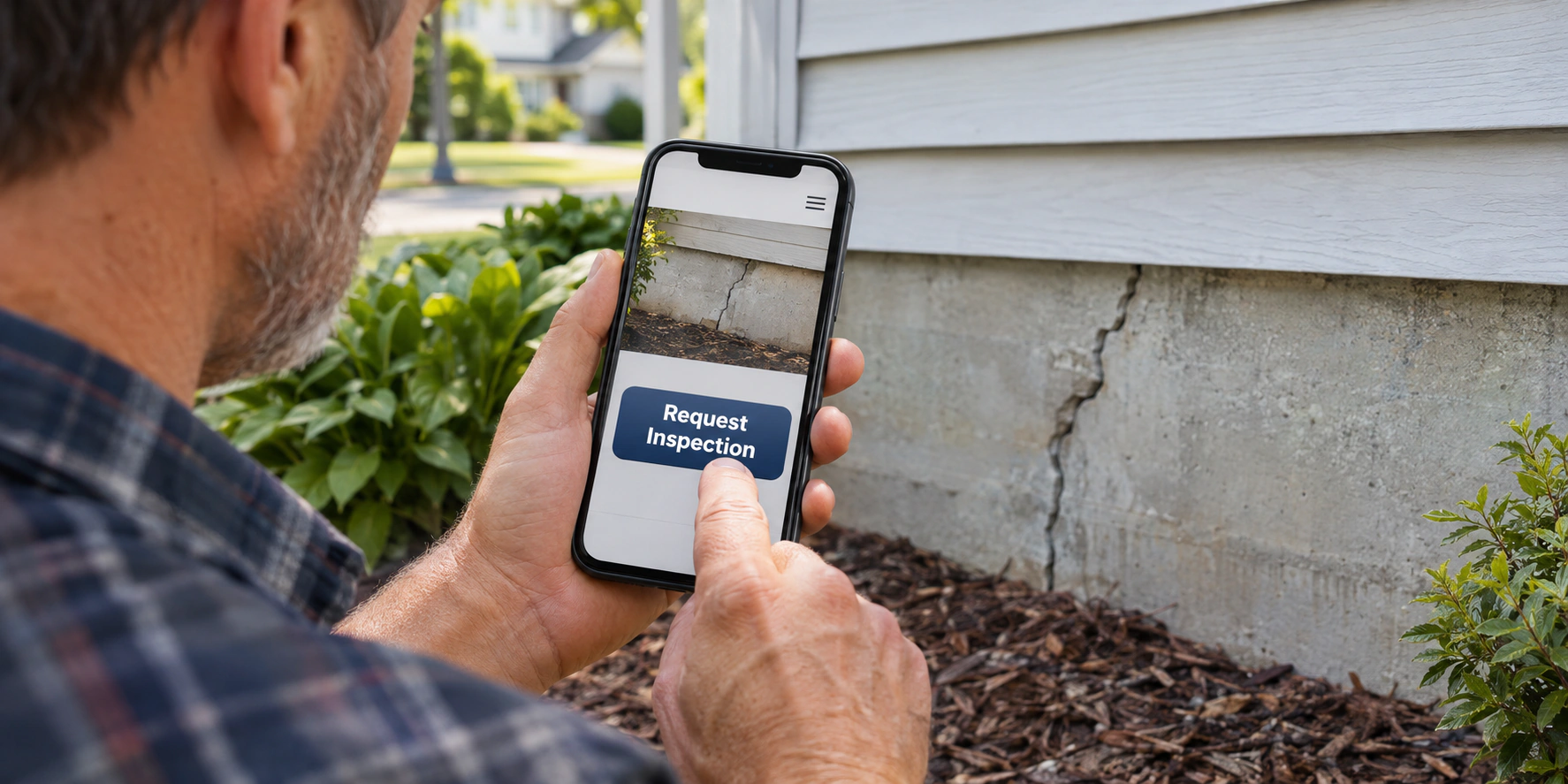 CTA · 2400 × 1200Homeowner tapping an inspection-request button on a phone.
Find Out Why Qualified Visitors Are Not Requesting an Inspection
Your website may already receive useful traffic while losing opportunities through unclear messaging, mobile friction, weak trust, broken tracking, or an ineffective contact path.
We will review the data, pages, forms, calls, and customer journey, then prioritize the improvements most likely to create meaningful business value.